Bubble Vortex
FatMan StudioTrivia
4.430.00 Reviews
- Version
- 1.0.2
- Installs
- 10.00K
- Age Rating
- Everyone
Screenshots
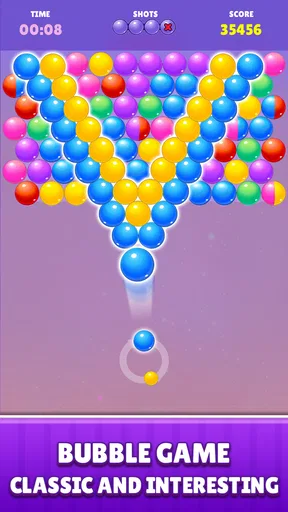
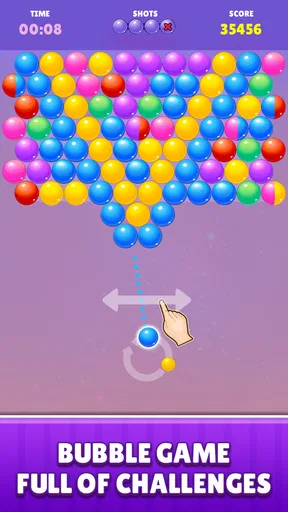

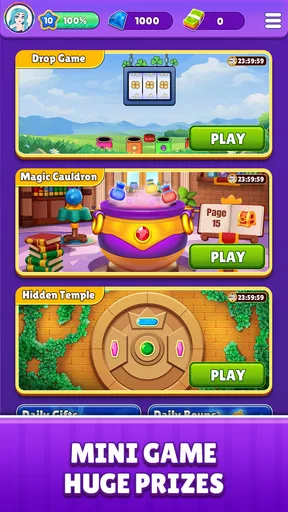
Our Review of Bubble Vortex
 Analysis by Appyee
Bubble Vortex is a trivia game built around one clear idea: popping bubbles while dealing with a spinning vortex. I found that this combination gives short play sessions a more active feel than a conventional question-and-answer quiz. Instead of simply reading a prompt and choosing an answer, you are asked to pay attention to movement, timing, and the changing position of the bubbles. That makes the game feel closer to a quick reflex challenge with trivia elements than to a traditional knowledge test.
That distinction matters when deciding whether it belongs on your phone. If you want a deep quiz platform with long explanations, large subject libraries, or a serious competitive ranking system, this is probably not the first game I would choose. If you enjoy compact rounds and like the idea of mixing general knowledge with a visual action mechanic, FatMan Studio’s game has a more distinctive hook than many ordinary trivia titles.
The game is free to download and is suitable for Everyone, which makes it easy to try casually. It was released on July 4, 2025, and version 1.0.2 is the version I would look for when installing it. Its store presence is still relatively modest, with over ten thousand installs, but the average score sits at 4.4 from hundreds of ratings. That suggests an encouraging early response without making the rating seem like a guarantee that every player will enjoy the same style.
The spinning bubble mechanic changes how trivia feels
The most important capability here is not simply that bubbles can be popped. It is the way the vortex turns the play area into something you have to read continuously. In a normal trivia game, the main challenge is recalling information and selecting an option. In Bubble Vortex, the visual arrangement adds another layer: I have to notice what is available, decide what deserves attention, and act before the movement makes the choice less convenient.
That extra layer creates a useful change in pace. A question can be easy in terms of knowledge but still require concentration because the bubble field is not static. Conversely, a difficult question can feel less punishing when the game keeps the interaction lively. The result is a format that suits players who lose interest when a quiz becomes a sequence of menus and buttons.
I also like that the central mechanic gives the game an obvious identity. Many trivia apps can feel interchangeable because they share the same pattern of question, answer, score, and next question. The vortex gives this one a physical presence. Even before thinking about its subject matter, you understand that movement and popping are part of the experience.
The real strength is the combination of mental recall and visual timing. Neither part has to carry the entire game by itself. The trivia provides a reason to stay engaged, while the bubble action prevents the session from feeling like passive reading. That balance is why I see it working best as a quick break rather than as a replacement for a full educational quiz tool.
What the mechanic asks from the player
In practice, I would approach each round with two kinds of attention. First, I would identify the relevant bubble or answer. Second, I would track how the vortex is affecting the arrangement before tapping. This sounds simple, but it changes the way you play: rushing may lead to an avoidable mistake, while waiting too long can make the screen harder to read.
This makes the game more interesting for people who enjoy improving their process rather than relying only on stored knowledge. You can become better at scanning the screen, recognizing the useful target quickly, and ignoring distractions. That is a different kind of progress from memorizing more facts, and it gives repeat sessions a practical purpose even when the questions themselves are familiar.
There is also a trade-off. A player who wants trivia to be calm and deliberate may find the moving presentation distracting. Someone who enjoys carefully considering every answer could prefer a conventional quiz where the interface stays out of the way. Bubble Vortex is making a deliberate choice to put action into the quiz, so the same feature that makes it refreshing can also make it less comfortable for slower players.
How I would use it in an ordinary day
The best everyday scenario is a short waiting period: a bus stop, a break between tasks, or a few minutes before an appointment. I would open it when I wanted something more engaging than scrolling but did not have enough time to begin a longer game. The bubble-and-vortex format seems naturally suited to that situation because it gives me an immediate activity instead of asking me to prepare a large session.
It can also work as a light shared game. If a friend enjoys trivia but dislikes formal quiz apps, the popping mechanic gives you something visible to react to and discuss. You can compare how quickly you recognized an answer or whether a mistake came from knowledge or from reacting too quickly. I would not treat it as a serious party-game replacement, but it has the right kind of accessible premise for informal play.
One useful habit is to separate speed from confidence. When I know an answer immediately, the temptation is to tap without checking the surrounding bubbles. The vortex makes that risky because being certain about the fact does not automatically mean I have selected the right target. I would first locate the intended bubble, then tap with a deliberate movement. That small pause helps preserve accuracy without turning the game into a slow quiz.
Another practical approach is to use short sessions rather than forcing a long run. The appeal comes from the combination of quick recognition and active tapping. After several rounds, the visual motion may become tiring for some players, especially if they are already using their phone in a bright or busy environment. Treating it as a compact break keeps its strongest feature from becoming a source of fatigue.
Why it is different from a standard trivia app
The usual alternative in this category focuses almost entirely on knowledge. You read, choose, and move on. That format is better when your main goal is learning through explanations or measuring what you know without visual pressure. Bubble Vortex is better when you want the quiz to feel like a game first and a test second.
That comparison also explains where it may fall short. A traditional trivia app can make it easier to review mistakes, concentrate on a particular subject, or play at your own pace. Bubble Vortex’s distinctive interaction is more immediate, but the information itself is not the only thing demanding attention. If you are looking for structured study, a dedicated quiz or learning app would be the more sensible choice.
Against a pure bubble-popping game, the advantage is the added mental purpose. You are not only chasing visual activity; you are connecting the action to trivia decisions. The disadvantage is that players who want relaxing, repetitive popping may find the knowledge component interrupts the flow. This is not an all-purpose casual game. Its appeal depends on enjoying both sides of the design.
Small decisions that make the experience better
I would recommend playing with the screen free of distractions. Because the vortex is central to the experience, notifications, glare, or a cluttered environment can have a larger effect than they would in a static quiz. Keeping the phone at a comfortable distance and using a steady grip makes it easier to follow the bubble positions instead of chasing them with hurried taps.
I would also avoid judging the game only by the difficulty of individual questions. The challenge is partly about execution. If I miss something I knew, I would treat that as a signal to improve scanning and timing rather than assuming the trivia content is too hard. This distinction is useful because it tells me whether I am struggling with knowledge or with the interface.
For younger players, the Everyone rating makes the game broadly approachable, but I would still pay attention to how they respond to the moving presentation. The content rating says the game is suitable for a general audience; it does not mean every child will prefer a motion-focused format. A child who enjoys quick visual interaction may take to it immediately, while one who prefers quiet question cards may be happier with another option.
The game is also a reasonable low-commitment experiment because the download itself is free. However, free access does not mean every part of the experience has no commercial consideration: in-app purchases range from $2.99 to $99.99 per item. I would advise setting a purchase boundary before handing the phone to a child or using the game as a casual family distraction. The broad range makes it especially important to treat optional spending carefully rather than assuming the free label tells the whole story.
The trade-offs behind the fun
The vortex is both the reason to try the game and the main reason some people will leave it. Players who enjoy motion, quick reactions, and visual targets get a more active trivia session. Players who want a clean, distraction-free question interface may experience the same movement as interference. That is not a minor preference; it affects the basic way answers are processed.
Another limitation is that the game’s strongest value appears to be moment-to-moment engagement rather than detailed learning. I would not install it expecting long explanations after every answer or a carefully organized study path. It is more suitable for testing myself in passing and enjoying the act of playing. For school revision, professional exams, or a subject-specific learning plan, I would choose an app designed around those goals.
The early size of its audience is worth keeping in perspective as well. An average of 4.4 from 383 ratings is a positive sign, and there are 30 written reviews to browse, but that is still a smaller feedback base than the largest established mobile games. I would read that as encouragement to try it, not as proof that its pacing will suit everyone. The game has enough response to show that the idea is landing with some players, while still feeling like a relatively young release.
Version 1.0.2 also places the game at an early stage of its life. That can be appealing if you like discovering a small title before it becomes familiar, but it also means I would keep expectations focused on the current core experience rather than assuming a huge, mature ecosystem around it. The minimum requirement of Android 7.0 makes it accessible to many older Android phones, although actual comfort will still depend on the device’s screen and responsiveness.
I would skip it if I dislike timed-feeling interactions, become uncomfortable with rotating visual layouts, or want a trivia app that teaches through detailed explanations. I would also skip it if I am specifically searching for a large multiplayer community or a formal study tool. The game’s purpose is narrower and more casual: it turns trivia into an active bubble challenge.
Who gets the most from Bubble Vortex
The best audience is someone who likes trivia but wants more energy than a list of multiple-choice questions provides. It suits players who can spare a few minutes, enjoy improving hand-eye timing, and do not mind that the interface competes for attention with the facts. It is especially easy to recommend to a friend who says ordinary quiz apps feel repetitive but still enjoys testing general knowledge.
It may also appeal to casual players who normally choose simple arcade experiences. The trivia gives the session a changing mental focus, while the popping action keeps the controls approachable. You do not need to commit to a complicated ruleset to understand the basic appeal. That accessibility is one of the reasons the Everyone rating feels appropriate for its intended audience.
On the other hand, serious trivia fans should decide what they value most. If the pleasure comes from deep questions, careful analysis, and learning from wrong answers, a conventional quiz platform may offer more substance. If the pleasure comes from fast reactions and the satisfaction of clearing targets, a pure arcade game may feel smoother. Bubble Vortex occupies the middle ground, and its success depends on whether that middle ground sounds enjoyable to you.
My recommendation is to try it with a specific expectation: treat it as an active trivia break, not as a complete knowledge course. Give yourself a few short sessions and notice whether the vortex makes you more engaged or merely more distracted. If you enjoy adjusting your timing and scanning the field while answering, the game has a clear reason to stay installed. If you keep wishing the bubbles would stop moving so you could concentrate, another trivia format will serve you better.
Overall, FatMan Studio has chosen a focused concept rather than trying to imitate every trivia game at once. The spinning bubble mechanic gives the title personality, creates a genuine skill component, and works well in small everyday gaps. Its limitations are equally clear: it is not built around deep instruction, and its movement will not suit every player. For me, that honest trade-off is what makes it worth trying. Bubble Vortex is at its best when you want your trivia to feel like a quick arcade challenge instead of a quiet questionnaire.
Verdict
Strengths of Bubble Vortex
- Simple controls make it easy to start playing immediately.
- Short levels are convenient for quick gaming sessions.
- Bright visuals give the game a cheerful, casual feel.
- Increasing difficulty keeps later stages more engaging.
- Offline play is useful when you have no internet connection.
Limitations of Bubble Vortex
- Repetitive gameplay may become predictable after extended play.
- Some levels rely heavily on precision and can feel frustrating.
- Ads may interrupt the experience, especially between levels.
- Progression can feel slow without optional in-app purchases.
- Limited multiplayer or social features reduce long-term variety.
Other Releases by FatMan Studio
View All
Solitaire Oasis
Card4.4
Similar Picks in This Category
View All
Millionaire 2026 Quiz & Trivia
Quiz & Trivia Games by Submarine Apps4.5

Brain Test 2: Tricky Stories
Unico Studio4.7

Trivia Crack: Brain Quiz Games
etermax4.4

QuizzLand. Quiz & Trivia game
Quiz & Trivia Games by Mno Go Apps4.8

Brain Test: Tricky Puzzles
Unico Studio4.7

Logo Quiz
bubble quiz games4.5
Frequently Asked Questions
What is Bubble Vortex and how does the game work?
Bubble Vortex is a colorful bubble-shooting puzzle game built around aiming, matching, and clearing groups of bubbles. You launch bubbles toward a rotating or constantly changing play area, create combinations of matching colors, and try to complete each stage with as few shots as possible. Its simple controls make it easy to start, while later levels introduce more challenging layouts, obstacles, and timing decisions.
Is Bubble Vortex free to download and play?
Bubble Vortex can generally be downloaded and played without an upfront purchase, although the exact availability of free content may depend on the version and platform. Like many free-to-play puzzle games, it may include advertisements, optional in-app purchases, extra lives, boosters, or other convenience items. Before downloading, it is worth checking the store listing and reviewing purchase settings, especially if children use the device.
Does Bubble Vortex require an internet connection?
The basic puzzle gameplay may work without a continuous internet connection, which is useful when traveling or playing with limited mobile data. However, certain features can depend on being online, including advertisements, cloud synchronization, updates, leaderboards, special events, or in-app purchases. Offline behavior can also vary between Android and iOS versions, so users should test the game after installation rather than assuming every feature will be available without internet access.
Is Bubble Vortex suitable for children and casual players?
Bubble Vortex is designed around straightforward matching mechanics, bright visuals, and short levels, making it approachable for casual players and many younger users. Nevertheless, parents should review the age rating, advertising content, and in-app purchase options shown on the relevant app store. Difficulty can increase as the game progresses, so younger children may need help with advanced stages or with managing optional purchases.
What should I check before downloading Bubble Vortex?
Before installing Bubble Vortex, check that your Android or iOS device meets the current system requirements and has enough free storage for the app and future updates. It is also sensible to read the latest store reviews, confirm the developer name, and look at the privacy information to understand what data may be collected. Finally, verify whether advertisements, optional purchases, or account permissions match your expectations.
Play our best games!


